Start with the application, not the label
An emerging motor concept is useful when it solves a relevant constraint. A new topology, material or cooling approach should be evaluated against the actual duty cycle, packaging, electrical supply and production context.
Claims about high performance become meaningful only when the boundary is clear. Ask which operating condition was assessed and which parts of the system were included.
Inspect what the headline leaves out
A compact active region may still require substantial cooling, structure or power electronics. Likewise, a favorable operating point does not establish performance over the full duty cycle.
Compare complete and consistently defined boundaries. The right boundary depends on the decision: an early electromagnetic comparison can be narrow, while a vehicle integration decision needs the surrounding system.
Look for the limiting interface
A motor improvement can move the limit elsewhere. A concept that demands different current, switching behavior or cooling may require changes to the inverter or thermal system. These interfaces are part of evaluating the idea, even when they are outside the motor designer's immediate scope.
Map the dependencies before treating a component-level gain as a system benefit. Identify which supporting changes are feasible and which remain assumptions.
Consider how the design will be built
Performance predictions often assume geometry and properties that are easier to specify than to manufacture consistently. Tolerances, insulation, assembly processes, material availability and inspectability all affect whether a concept is practical.
This does not mean that a new approach must be production-ready to deserve investigation. It means the maturity of the evidence should match the decision being proposed.
Ask how the result was demonstrated
An analytical estimate, a numerical model, a single prototype and repeated representative tests provide different kinds of evidence. None should be described as another.
For an unfamiliar concept, ask what has been measured, under which conditions and with what uncertainty. Also ask what remains inferred. A clear answer can make an early idea easier to assess than a more polished claim with an unclear basis.
Use a staged comparison
Begin with the application requirements and a consistent reference concept. Identify the proposed advantage and the assumptions that support it. Then choose the smallest useful analysis or experiment that could challenge those assumptions.
This creates a practical path from an interesting idea to an engineering decision. The goal is not to predict which label will dominate, but to establish whether a particular approach earns its place in a particular system.
This introductory editorial article is separate from Dr. Leng’s project record. No authored research-paper bibliography was supplied in the source document.
Connected expertise.
Electric Aviation
Propulsion-control software development from system models to prototype aircraft flight.
Explore →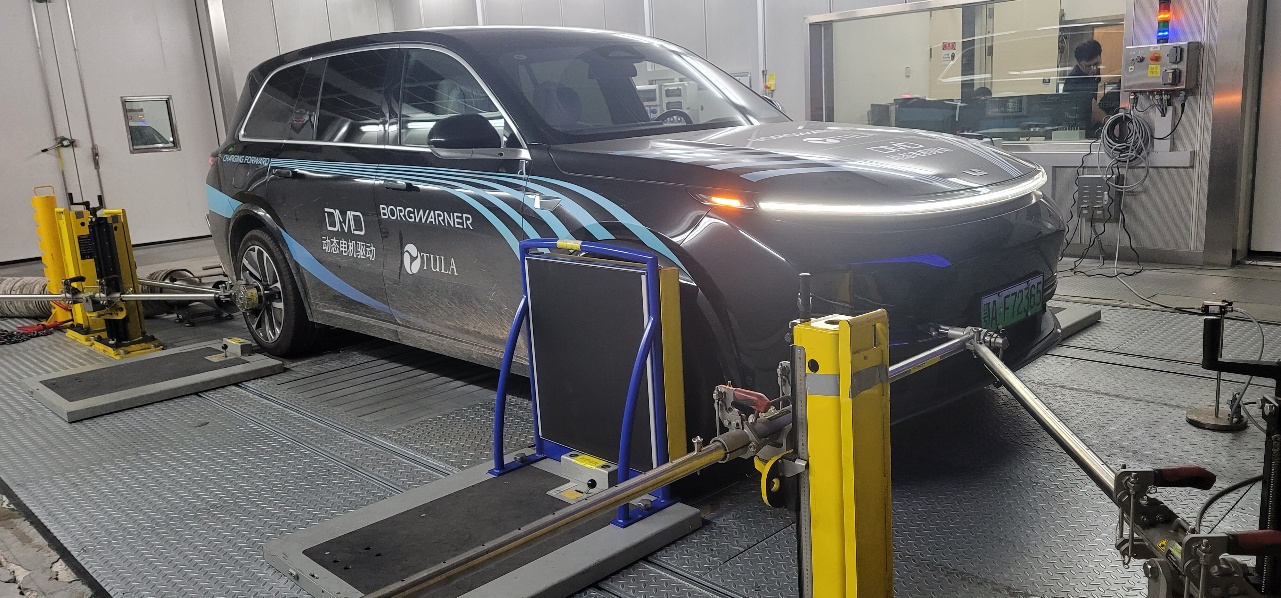
Dynamic Motor Drive vehicle test · supplied document
Dynamic Motor Drive
Software-based torque modulation for a reported low-load efficiency investigation.
Explore →Bring us your challenge.
Start with your application, constraints and the decision you need to make.